Sometimes we run into problems that are more complex than a flashback. It needs more than simple Grounding or separating past from present. Several parts are activated at the same time and they are influencing each other in a way that maintains the problem. We have to actively intervene. I will explain 3 different versions of sorting through complex situations like this.
Survival Responses (regulation)
Parts might experience stress responses (fight, flight, freeze, shutdown) or social survival instincts (attachment cry, seeking help, withdrawing, seeking dominance and control, appeasement or submission). It can sometimes help to go through every part and write down which survival response they are showing and how these responses might affect each other. For example, sometimes the fight response of one part scares another one that shuts down which triggers another one that tries to appease. We can help one part after the other with regulation once we know what triggered the chain reaction.
This can be useful when there are a lot of survival responses happening at the same time because there has been a trigger and as a result of that, complex dysregulation. It is less helpful for complex situations that were caused by other life events and result in tension that is not outright dysregulation.
I barely ever use this anymore. It did not prove to be as useful as it sounds in the long run but there are many people who swear by it and it is worth trying.
(You can find detailed info on this approach in Janina Fisher’s book and a shorter version where we explain it on this website.)
Needs and values (relationship)
Complex situations can occur without a trigger. Sometimes there are conflicting needs. What feels right for some parts does not consider the needs of other parts. Similarly, our actions might not be in line with the most important values of other parts. They might start to boycott or sabotage us and cause a stillstand. To resolve these situations, we don’t look at the survival responses, we look for the needs or values in that situation.
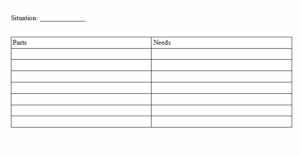
Example: A person with DID is trying to decide how to manage contact with family and got stuck with setting boundaries. When creating a spreadsheet with all parts and their needs in this specific situation it shows that some parts really need safety and want to cut contact. Some are scared of being left alone, they have a need for social connection and care. Other parts are scared of conflict, they have a need for peace and harmony. Throw in a part who values family as a meaningful way to live life in community for good measure and you get a complex situation without an obvious solution.
To resolve situations like these, we need to find ways to meet needs. That might mean that we change our choices but it can also include alternative ways to meet needs, or a caring and earnest explanation why they cannot be met in this case. This is where we mainly work with compromises and agreements that we can discuss in team meetings. It helps to write things down because it can be hard to see all the possible interactions when we try to negotiate it in our mind alone.
This is a valuable exercise that we will need even later in our healing journey. If we aim for ‘healthy multiplicity’ we will still need to do this for the rest of our life because these complex situations of conflicting needs are part of our regular life with DID. The better we get to know our system the better we get at managing life without hiccups but it will still happen when new situations occur. This is an exercise we should use often when making decisions and it should be in our toolbox for regular use. Even people without dissociation sometimes run into contradicting needs or values and have to sort through them. Because ours are dissociated, we need to communicate about them intentionally.
(This version is a straight-up adaptation from regular CBT for DID purposes that is a recognized standard)
Longing and Striving (integration)
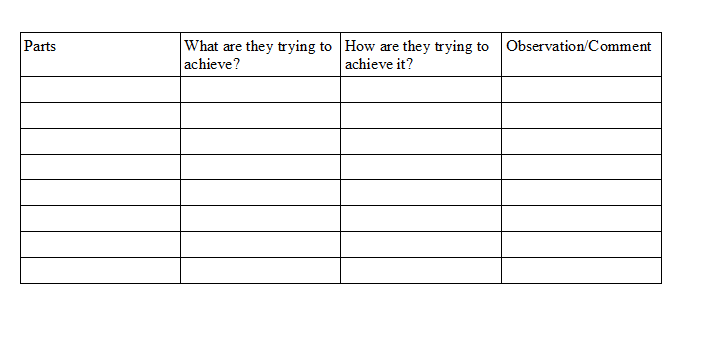
Sometimes situations get tricky because of who we are. Parts function in certain ways and their strategies of dealing with things end up getting in the way of bigger goals. If you have done thorough mapping, you might have figured out the action systems different parts operate in. They come with very specific drives or motivations attached. If you have read Nijenhuis and wondered what in all the world ‘modes of longing and striving’ are and why that would be a useful way to understand DID, this is it. We can sort through complex situations by asking every part: What are you trying to achieve here? And how are you trying to achieve it? which are the most basic questions to explore longing and striving. It is a broader approach than asking about needs or values and includes needs and values as well as survival responses. We are basically asking parts what is motivating them, what they are ‘willing’ or longing and striving to achieve. Then we check their strategy to achieve it.
We can encounter a bunch of different constellation:
A goal does not fit our current situation
A part might be stuck in the past and is still unaware that the goal has been achieved. It is over, we won. It is not necessary to try to achieve that goal any longer or to repeat an action (strategy) that was a life-saver. It worked. By drawing attention to how it worked in the past and how we got over that past situation and comparing it to the current reality we can resolve that need for action within that part. We mainly need integrative actions like synthesis and presentification here. The old goal gets sorted into the past and the present can open up new goals with new strategies.
A strategy does not fit the goal
Sometimes parts know about the present and they have goals within the present but they still use old strategies that will not get them to their goal at all. Their idea of how to get to what they want is flawed in the current reality or they have no better idea because they only know very limited strategies. In this case, we can offer options to try and connect them with parts who know other strategies. It is important to show where the current situation is different from the old one and when to use which strategy moving forward. Old Situation – old strategy, new situation – new strategy, not a mix of both. It doesn’t sound like it, but this is integrative work where we sort through the information and put everything in a new place where it fits and creates a consistent picture of past and present.
When the goals and strategies of parts themselves are coherent, we look at possible interactions between parts.
Parts try to achieve contradicting goals
Parts might try to achieve goals that oppose each other. They cannot be achieved at the same time. We are probably used to resolving situations like this with negotiations and compromises (see Needs&Values) and therefore a social approach. It is possible to use an integrative approach instead.
Because the functions of the Whole are divided into different parts, we encounter situations where functions that are supposed to take turns are activated at the same time. It is like trying to show both sides of a coin simultaneously. In reality, we only need one for this situation. We need both parts and their strategies at certain times but in this specific situation we use integrative actions to find out what fits this moment in time and who we are right now.
To do that, we connect all the information that we have, make ourselves aware of the present reality and how it differs from the past, look at the system as a whole person with complex skills and abilities and decide what fits us as a ‘person today’ the best. We shift the strategies that are available to our system so that they all find a place and the one that is most useful today is the one that is applied while the other one steps back for another situation. If done properly, the part whose strategy is not used this time will understand exactly why this is a good solution and support it because there is a broader understanding of how things work today. It is not a social contract like the agreements we negotiate when we compromise. It is based on a realization of the outside situation, the context of time and the way the system functions today. It has an integrative effect and not just a relational one. We need integrative actions like synthesis, realization, personification and presentification
Parts use contradicting strategies
Maybe the goals are actually fine but the way parts try to achieve them are getting in the way of each other because they have a different view of the world or people around them or different ideas how things should be done. This is often based on working within different action systems. A part who functions in a way that is very focused on attachment and relationship solves things differently than a part who is very focused on being in control over a situation. Because of the division of functions the system struggles to apply a mixture of strategies where we e.g. use 70% social skills and 30% self-control skills. We need to make an effort to share and cooperate to achieve the mix that is needed because one part cannot do it alone and one strategy alone is not working. We end up realizing that the strategies are not contradicting each other, they are complementing each other once we get them going together instead of separated from each other. This needs an integrative approach where we mix abilities across dissociative barriers for the right results. Taking turns will not work well. It is always surprising how something seemingly contradicting ends up fitting together in the end.
In some cases we can also just find different strategies to achieve the same goal and negotiation and compromise is just fine. An integrative strategy where the ability to tap into different ways of functioning is shared within the system will make it more flexible and it frankly makes life easier but this is an advanced skill that is usually used later in therapy because it crosses dissociative barriers.
One part’s solution is another part’s problem
The most interesting constellation we can find in our spreadsheet is when one part’s strategy is actually triggering another part or getting in their way. For example, one part wants to learn a new skill and learning always includes being bad at it at first. Another part tries to do everything perfectly, no mistakes allowed, because their trauma-related goal and strategy is to be safe through perfection. The part whose goal it is to broaden their horizon will trigger the part who needs to never make a mistake and get in their way
No part is wrong and no goal is wrong but we need to sort through a lot of information to resolve this situation and find the right place for everything.
We might be able to negotiate a new strategy that does not cause the problem for another part.
More commonly, we need to use the integrative actions we already discussed.
We orient all parts in the present time and present reality (who we are today, what the world around us is like today, the consequences of actions today). Old goals and old strategies get sorted into the pile of puzzle pieces that belong to the past picture. Current goals and strategies get sorted into the pile for Today, similar to ‘the same but different’ exercise we use for triggers. Then we can check if the goal or strategy that felt like a problem is still valid in today’s reality. Does it make sense to aim for this in the new picture or does it only make sense in the old picture?
Next we check if it still makes sense to evaluate the goal or strategy as problematic in the current reality. Would they still have the same consequences today that they used to have in the old picture?
Usually, the goal and strategy are either not a valid solution today or they aren’t actually a problem today.
In some really weird cases we realize that there is no contradiction. The strategy isn’t having the consequences a part thought they would have and the goals actually complement each other because they are needed at different times and not all at the same time. We need to figure out how to shift parts and their actions to fit the current situation and where a mixture of their strategies is actually the best match. Parts who assert themselves and parts who appease are not the opposites we think they are. They are most adaptive when they work together instead of working on separate goals.
We move the pieces of how we function inside ourselves to match the needs of our current situation. Some get more pronounced, others move to the background, some get connected and balanced with each other. They find a new place in the way the whole system functions in this place in time.
This is the most thorough approach and because it uses integration and not just negotiation it can cause lasting change. It makes it possible to gain some deep understanding of how we function (or dysfunction) as a system and it shows us exactly where to intervene to resolve a complex situation. It can also get overwhelming when this is tried alone or too early in our healing process. It is my currently favored strategy to resolve complex situations but it needs more experience and an advanced understanding of integration and how to sort through information. I would recommend doing this with a therapist first to learn what to pay attention to and how to notice where statements contradict each other. It can help to use both the Needs&Values exercise and the Longing&Striving one for the same complex situation to check which one gives us the best results with the least distress. Maybe you do one with your therapist and then try the other option at home, since you are already more familiar with the situation and its dynamic.
(This version is my adaptation from things Nijenhuis is teaching, a spelled out version of ‘who does what and why’. I haven’t seen him use a spreadsheet but the questions are his.)
Depending on the situation that we are trying to resolve we would choose a slightly different approach. Regulation is the most basic one. Negotiation is the most common one for most of our inner struggles. The integrative approach is dear to my heart because it actually resolves some problems long-term. There is no reason to rush it, but integrative approaches do bring the biggest relief from suffering for the whole system.
You might also like
Relational vs integrative approaches
For Helpers
If you are thinking ‘OMG, this integrative tool is so simple and so impactful and I have never seen it put that way’ I need to make you aware that this is a variation of Enactive Trauma Therapy by Ellert Nijenhuis. He is currently easily disregarded by american DID researchers when to points out inaccuracies in theoretical foundations. I consider him the best theorist on DID we currently have. Good theoretical foundations result in sound therapy interventions. His foundations are rock solid. His texts are difficult, his teaching is easier. Listen to him. He has new treatment ideas that go beyond relational work. They focus on intrgration of functions which makes it very effective in relieving suffering. His approaches don’t create the same roadblocks for DID that I found with Janina Fisher when it comes to DID.